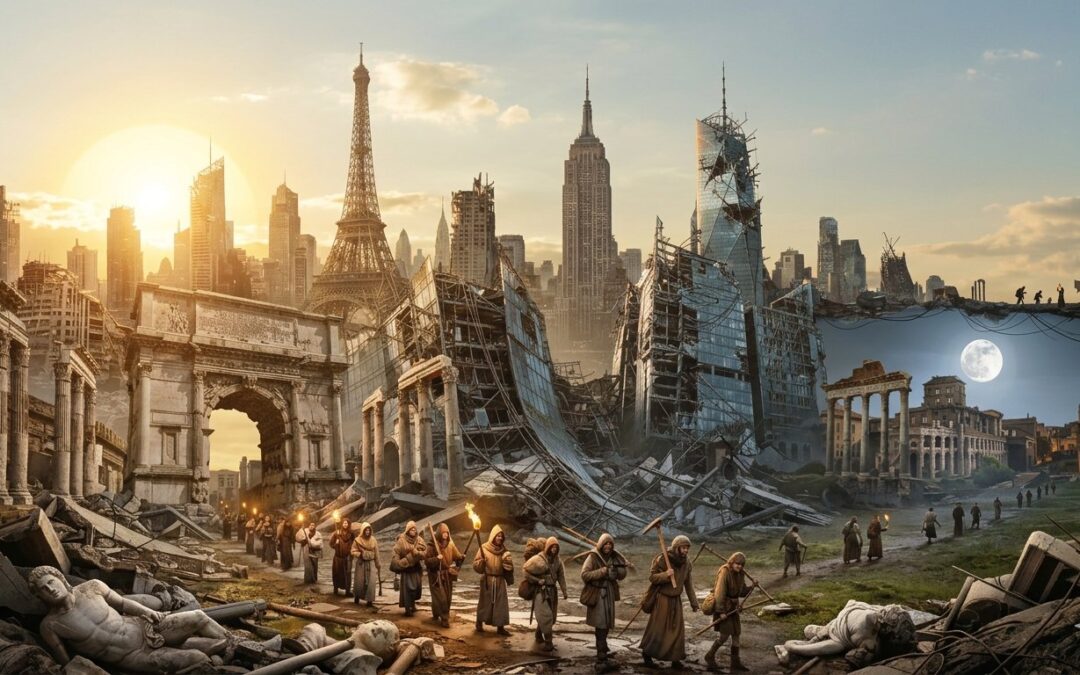
El autor sostiene la tesis de que el mundo occidental estaría atravesando el final de la Modernidad y entrando en una etapa comparable, en algunos aspectos, con la transición del Imperio romano hacia la Edad Media. El autor aclara que no habla del “fin de la historia”, sino de una transformación profunda del orden político, social, económico y cultural.
Buenos Aires, martes 6 octubre (PR/26) — La sensación de estar atravesando un umbral histórico se ha vuelto casi inevitable. En el tercer milenio, el mundo parece sacudido por fuerzas que desbordan las categorías con las que la Modernidad intentó comprenderse a sí misma.
El historiador, acostumbrado a mirar el pasado para interpretar el presente, se encuentra hoy ante un paisaje que recuerda más a la descomposición del mundo romano que a la promesa ilustrada del progreso indefinido. Como afirma el texto original: “La Modernidad que está agonizando es la nacida en el Siglo de las Luces.”
La caída del Muro de Berlín fue interpretada por muchos como el triunfo definitivo del capitalismo liberal y el cierre de las grandes narrativas ideológicas.
Sin embargo, lejos de inaugurar un orden estable, abrió una etapa de aceleración histórica en la que las certezas modernas comenzaron a resquebrajarse.
La racionalidad iluminista, que había reemplazado a la Cristiandad como principio organizador, ya no logra sostener la complejidad del mundo contemporáneo.
Diversos pensadores —Toynbee, Spengler, Berdiaeff, Eco, Minc, Rufin— han sugerido que estamos entrando en una “nueva Edad Media”. No se trata de un retorno literal al pasado, sino de una analogía estructural: fragmentación del poder, debilitamiento del Estado, proliferación de zonas autónomas, crisis de la razón, resurgimiento de identidades comunitarias y un clima general de incertidumbre. El artículo lo sintetiza con una frase que funciona casi como diagnóstico: “La ciudad se medievaliza.”
Las migraciones globales son uno de los signos más visibles de esta transformación. Como en los siglos IV y V, pueblos enteros se desplazan, reconfigurando territorios y culturas. Europa recibe millones de personas de Asia y África; Estados Unidos absorbe flujos latinoamericanos y asiáticos; Argentina se convierte en destino de comunidades diversas. Este movimiento no responde a políticas estatales: es el devenir de la historia, un reacomodamiento profundo que recuerda la “venganza” del mundo colonizado, según Christopher Dawson.
Al mismo tiempo, las grandes ciudades se vuelven inhabitables. La inseguridad, la contaminación, la saturación tecnológica y el estrés empujan a muchos hacia el campo, reproduciendo el patrón romano de abandono urbano y refugio en villae o feudos.
Los countries funcionan como nuevos castillos amurallados, con guardias privados, peajes y normas propias.
El Estado, debilitado, conserva apenas su capacidad impositiva, como en la etapa tardía del Imperio.
La economía hiper‑tecnificada muestra signos de fragilidad. Una crisis profunda podría desencadenar formas de subsistencia que favorezcan a quienes ya cultivan pequeñas parcelas y buscan autonomía frente al caos urbano. La saturación tecnológica impulsa un deseo de retorno a la naturaleza, eco del ideal bucólico virgiliano.
La Modernidad, que prometía emancipación a través del progreso técnico, parece haber generado un mundo demasiado complejo para sostenerse.
La vida social también exhibe rasgos premodernos: inseguridad creciente, mafias, mercados negros, justicia por mano propia, milicias privadas. La autoridad estatal se debilita y surgen estructuras de poder local que recuerdan al vasallaje medieval.
Las jerarquías sociales se endurecen y aparecen nuevas formas de servidumbre laboral, donde empleados, deportistas y gerentes quedan atrapados en sistemas sin libertad real.
La cultura se globaliza, la moda se informaliza, y las identidades se fragmentan. El SIDA es interpretado como la “lepra medieval” del siglo XX, y se anticipan nuevas pestes y rituales de miedo. La religiosidad resurge, y la mujer adquiere un papel central en la vida espiritual, como había anticipado Berdiaeff.
La familia tradicional romano‑cristiana se disloca, las costumbres se imponen sobre la ley escrita y la sociedad experimenta procesos de feminización y matriarcalización.
La idea de nación se debilita. Las ideologías se diluyen y surgen creencias “light”, adaptadas a un mundo sin grandes relatos. Se fantasea con un gobierno mundial, aunque sin éxito: la humanidad parece entrar en una etapa de dispersión, no de unificación.
Todo esto sugiere que no estamos ante el fin de la historia, sino ante el fin de una era. La Modernidad se descompone y da paso a un orden fragmentado, emocional, localista e inseguro, donde la racionalidad iluminista ya no organiza la vida social.
La “nueva Edad Media” es una metáfora estructural que permite comprender la transición hacia un mundo donde el poder se dispersa, las ciudades se transforman, las migraciones reconfiguran territorios y las instituciones modernas pierden cohesión.
El tercer milenio no comienza con certezas, sino con una transición civilizatoria cuyo desenlace permanece abierto. Quizás, como en toda Edad Media, lo que hoy percibimos como caos sea el germen de una nueva forma de orden que todavía no alcanzamos a imaginar.
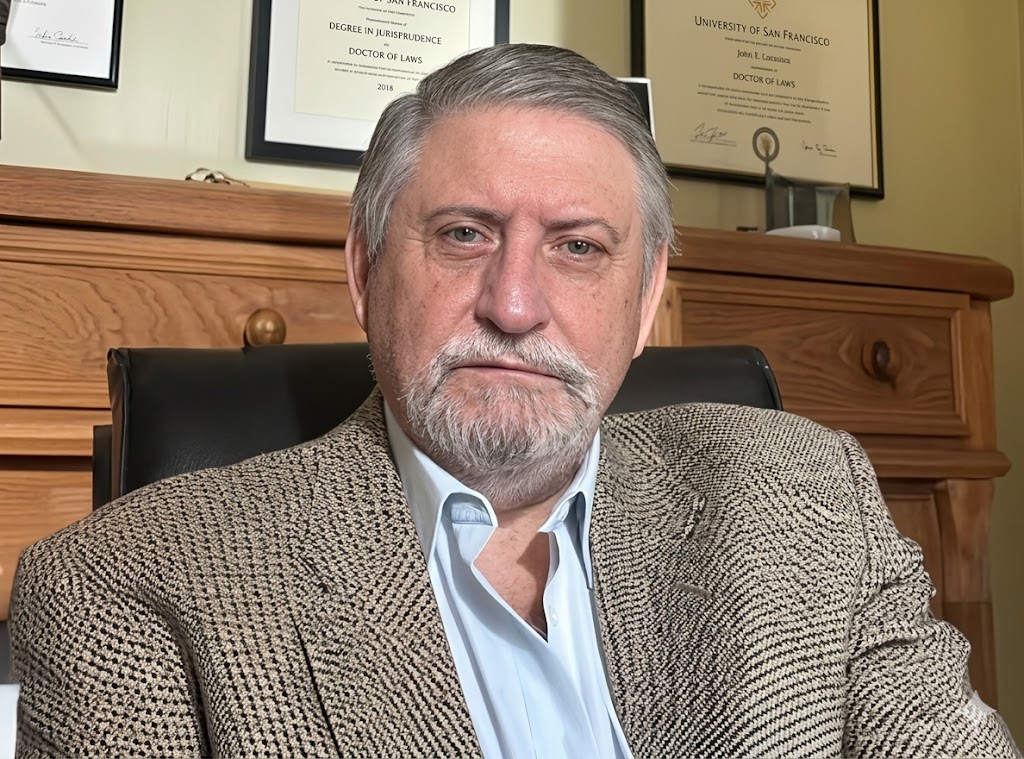
Florencio Hubeñák es historiador, doctor en Historia y en Ciencias Políticas, docente universitario y autor de numerosos libros y artículos de su especialidad, como ser: “Historia integral de la cultura occidental”; “Roma: mito político” y la “Historia de la Universidad Católica Argentina”.
Primicias Rurales
Versión en inglés
Facing a New Middle Ages (English version)
By Dr Florencio Hubeñák
«The author argues the thesis that the Western world is going through the end of Modernity and entering a stage comparable, in some aspects, to the transition from the Roman Empire to the Middle Ages. He clarifies that he is not talking about the ‘end of history,’ but rather about a profound transformation of the political, social, economic, and cultural order.»
The sense that we are crossing a historical threshold has become almost unavoidable. In the third millennium, the world appears shaken by forces that exceed the categories with which Modernity once tried to understand itself. Historians, accustomed to looking to the past in order to interpret the present, now confront a landscape that resembles the decomposition of the Roman world more than the Enlightenment promise of endless progress. As the original text puts it: “The Modernity that is agonizing is the one born in the Age of Enlightenment.”
The fall of the Berlin Wall was interpreted by many as the definitive triumph of liberal capitalism and the closure of the great ideological narratives. Yet instead of inaugurating a stable order, it opened a period of historical acceleration in which modern certainties began to fracture. Enlightenment rationalism, which had replaced Christendom as the organizing principle of society, no longer seems capable of sustaining the complexity of the contemporary world.
A number of thinkers—Toynbee, Spengler, Berdiaeff, Eco, Minc, Rufin—have suggested that we are entering a “new Middle Ages.” This is not a literal return to the past but a structural analogy: fragmentation of power, weakening of the state, proliferation of autonomous zones, crisis of reason, resurgence of communal identities, and a general climate of uncertainty. The text captures this transformation in a phrase that functions almost as a diagnosis: “The city becomes medieval.”
Global migrations are among the most visible signs of this shift. As in the fourth and fifth centuries, entire populations are on the move, reshaping territories and cultures. Europe receives millions from Asia and Africa; the United States absorbs constant flows from Latin America and Asia; Argentina becomes a destination for diverse communities. This movement does not respond to state policies—it is the unfolding of history itself, a deep reconfiguration reminiscent of what Christopher Dawson described as the “revenge” of the colonized world.
At the same time, major cities are becoming increasingly uninhabitable. Insecurity, pollution, technological saturation, and stress push many toward rural areas, reproducing the Roman pattern of urban abandonment and retreat into villae or feudal domains. Gated communities function as new fortified castles, complete with private guards, toll-like access, and their own internal codes. The state, weakened, retains little more than its taxing power, much like the late Roman Empire.
The hyper‑technified economy also shows signs of fragility. A severe crisis could trigger subsistence-oriented forms of life that favor those who already cultivate small plots and seek autonomy from urban chaos. Technological saturation fuels a desire to “return to nature,” echoing Virgil’s pastoral ideal. Modernity, which promised emancipation through technical progress, seems to have produced a world too complex to sustain itself.
Social life exhibits premodern traits as well: rising insecurity, mafias, black markets, vigilantism, and private militias. State authority weakens, and local power structures emerge that resemble medieval vassalage. Social hierarchies harden, and new forms of servitude appear in the labor market, where employees, athletes, and managers find themselves trapped in systems with little real freedom.
Culture becomes globalized, fashion informalized, and identities fragmented. AIDS is interpreted as the “medieval leprosy” of the twentieth century, and new plagues and rituals of fear seem possible. Religiosity resurges, and women assume a central role in spiritual life, as Berdiaeff predicted. The traditional Romano‑Christian family structure dislocates, customs begin to override written law, and society undergoes processes of feminization and matriarchal reconfiguration.
The idea of the nation weakens. Ideologies dissolve, replaced by “light” beliefs suited to a world without grand narratives. Fantasies of a world government appear, though without success; humanity seems to be entering a phase of dispersion rather than unification.
All of this suggests that we are not witnessing the end of history, but the end of an era. Modernity is decomposing and giving way to a fragmented, emotional, localist, and insecure order in which Enlightenment rationality no longer organizes social life. The “new Middle Ages” is a structural metaphor that helps us understand the transition toward a world where power disperses, cities transform, migrations reshape territories, and modern institutions lose cohesion.
The third millennium does not begin with certainties but with a civilizational transition whose outcome remains unknown. Perhaps, as in every Middle Ages, what we now perceive as chaos is the seed of a new form of order that we cannot yet imagine.
About the Author
Florencio Hubeñák is a historian, Doctor in History and in Political Science, a university professor, and the author of numerous books and scholarly articles, including: “Comprehensive History of Western Culture”, “Rome: A Political Myth” and “History of the Catholic University of Argentina”
Primicias Rurales
Traducción al inglés: María Marta Cafiero