Con un proyecto de ley buscan bautizar una calle o espacio público porteño con su nombre. El piloto del Grupo 5 de Caza Douglas A-4B Skyhawk protagonizó con arrojo y valentía seis misiones de combate en 1982 y en todas regresó invicto. Es uno de los pilotos heroicos de Malvinas. Falleció en octubre pasado a los 70 años.

Carlos Rinke, piloto argentino y héroe de la guerra de Malvinas, falleció a fines de octubre pasado.
El homenaje propuesto busca reconocer la trayectoria militar, el valor en combate y el compromiso con la Patria de quien fuera uno de los protagonistas de las operaciones aéreas de la Fuerza Aérea Argentina durante la Guerra de Malvinas de 1982. En este sentido ya hay un ante proyecto de ley en la Legislatura porteña, pero en el que se busca sancionar un reconocimiento a su trayectoria.
La actual iniciativa tiene por objeto elevar al Palacio de la calle Perú un proyecto de ley que tiene otro objetivo: designar con el nombre de «Comodoro (R) VGM Carlos Alfredo Rinke» a una arteria o espacio público de Buenos Aires que reúna las condiciones legales y administrativas correspondientes.

Para ello, sus impulsores proponen exceptuar transitoriamente el artículo 5 de la ley 83 que regula la asignación de nombres a espacios públicos y prohíbe homenajear a personas antes de cumplidos diez años de su fallecimiento.
El proyecto es empujado por su familia y por los compañeros de Rinke. «Este gesto representa mucho más que un reconocimiento individual. Significa incorporar a la memoria urbana de la Ciudad el testimonio de una generación de argentinos que defendió nuestra soberanía nacional en las Islas Malvinas», destacan.
Resaltan además que lograr que una calle o un espacio público lleve el nombre de Rinke «significa también transmitir a las nuevas generaciones valores que merecen perdurar: el coraje, la camaradería, el espíritu de sacrificio, la vocación de servicio, el profesionalismo y el amor por la Patria».

Carlos Rinke, el Numeral de Hierro
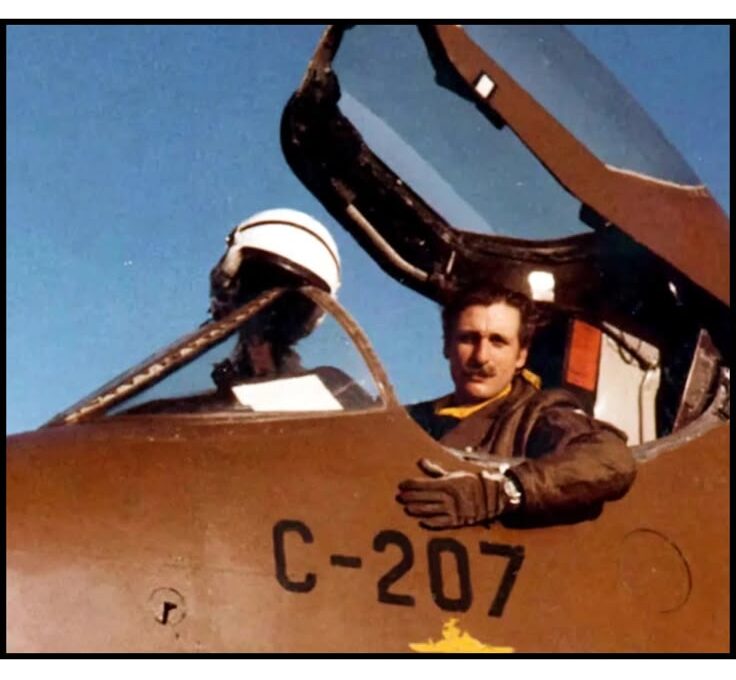
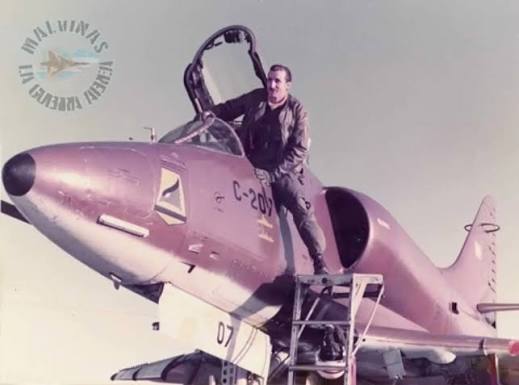
Rinke nació en Buenos Aires el 17 de febrero de 1956 y se formó en la Escuela de Aviación Militar. Integró el Grupo 5 de Caza y combatió a bordo de los cazabombarderos Douglas A-4B Skyhawk. Durante la guerra de Malvinas, realizó seis misiones de combate contra la flota británica, regresando sano y salvo de todas ellas.
Su bautismo de fuego sucedió el 1º de mayo de 1982, durante el inicio de las operaciones aéreas de combate de la Fuerza Aérea Argentina. Entre sus actuaciones más destacadas se encuentra su participación en las operaciones aéreas del 25 de mayo de 1982. Como integrante de la Escuadrilla Vulcano, formó parte del ataque que culminó con el hundimiento del destructor británico HMS Coventry.
Asimismo, el 8 de junio de 1982 integró la Escuadrilla Dogo durante el ataque a los buques británicos Sir Galahad y Sir Tristram en Bahía Agradable, una de las acciones más contundentes de las fuerzas argentinas durante el conflicto. Y el 21 de mayo voló sobre San Carlos como numeral del primer teniente Luciano Guadagnini, quien falleció durante el ataque a la fragata HMS Antelope.

El comodoro formó parte fundamental de la famosa escuadrilla encabezada por el entonces capitán Pablo Carballo, volando a escasos metros sobre el mar a más de 800 km/h para eludir radares e interceptores Sea Harrier. Realizó un total de 6 misiones de combate de las 505 salidas ejecutadas por la Fuerza Aérea, regresando con vida de todas.
«Su desempeño profesional, su arrojo y la confianza que inspiraba en sus compañeros le valieron el histórico apodo de «Numeral de Hierro», con el que trascendió dentro y fuera de la institución», recuerdan sus familiares, amigos y compañeros en el comunicado.
Más allá de sus condiciones como piloto de combate, Rinke fue un hombre profundamente comprometido con sus camaradas, su familia y sus convicciones espirituales.
Afrontaba sus misiones rezando el rosario y, después de la guerra, dedicó parte de su vida a brindar conferencias y compartir sus experiencias, destacando siempre el valor de sus compañeros y recordando especialmente a quienes no regresaron. Una de sus expresiones más conmovedoras sintetiza el sentimiento de los combatientes: «Salir con un compañero y volver sin él… eso no se olvida».
Tras conocerse la noticia de su muerte, diferentes figuras de la política nacional expresaron sus condolencias. El exministro de Defensa Luis Petri recordó al piloto en sus redes sociales y escribió: «Hasta siempre, Numeral de Hierro». Y detalló las maniobras del piloto: «Al ras del mar, a 800 km/h, con un Rosario rezado antes de despegar».
La vicepresidenta Victoria Villarruel también manifestó su pésame. «Hoy me toca despedir con profundo dolor y emoción al comodoro Carlos Alfredo Rinke, uno de nuestros héroes de Malvinas, un Halcón que en 1982 arriesgó su vida por la Patria y por sus camaradas», publicó la funcionaria.
Ahora, sus compañeros y familiares buscan que la historia de Rinke, el Numeral de Hierro, transcienda más allá del paso del tiempo y quede guardada en la memoria viva de la Ciudad de Buenos Aires, designando a una calle o un espacio público con su nombre.
Malvinas: Proposal to Name a Street or Public Space in Buenos Aires After Carlos Rinke, Honoring the “Iron Wingman” (English version)
November 16, 2026 – 7:18 p.m.
A legislative bill seeks to name a street or public space in the City of Buenos Aires after the late Air Force Commodore (Ret.) Carlos Alfredo Rinke, in recognition of his outstanding service during the 1982 Malvinas War.
The pilot, known by his nickname “Numeral de Hierro” (Iron Wingman), flew six combat missions in a Douglas A-4B Skyhawk with the Argentine Air Force’s 5th Fighter Group. He demonstrated extraordinary courage and skill, returning safely from every mission. He was one of the heroic pilots of the Malvinas War. He died last October at the age of 70.
A Tribute to a Falklands War Hero
An initiative seeks to name a street or public space in the City of Buenos Aires after Commodore (Ret.) Carlos Alfredo Rinke, a Malvinas War veteran.
Rinke, who was the father of five children and grandfather of twelve, died on October 28 at the age of 70. He passed away in Córdoba after a difficult battle with leukemia and a bone marrow transplant donated by his son, Lucas Rinke.
His funeral was held with full military honors at the Córdoba Air Force Garrison, accompanied by family members and fellow members of the Argentine Air Force.
The proposed tribute seeks to recognize his military career, his courage in combat, and his commitment to his country. Rinke was one of the key figures in the Argentine Air Force’s aerial operations during the 1982 Malvinas War.
A preliminary bill has already been introduced in the Buenos Aires City Legislature to recognize his achievements. The new initiative, however, seeks to advance a separate legislative proposal: naming a street or public space in Buenos Aires “Commodore (Ret.) Malvinas War Veteran Carlos Alfredo Rinke.”
To make this possible, the sponsors propose temporarily waiving Article 5 of Law No. 83, which regulates the naming of public spaces and generally prohibits commemorating individuals until ten years after their death.
The proposal is being promoted by Rinke’s family and fellow servicemen.
“This gesture represents much more than an individual tribute. It means incorporating into the city’s urban memory the testimony of a generation of Argentines who defended our national sovereignty in the Malvinas Islands,” the initiative’s sponsors emphasize.
They also point out that naming a street or public space after Rinke would help pass on to future generations values that deserve to endure: courage, camaraderie, a spirit of sacrifice, dedication to public service, professionalism, and love of country.
Carlos Rinke: The “Iron Wingman”
Rinke was born in Buenos Aires on February 17, 1956, and trained at the Military Aviation School. He served with the 5th Fighter Group, flying Douglas A-4B Skyhawk fighter-bombers.
During the Malvinas War, he flew six combat missions against the British fleet, returning safely from every one of them.
His baptism of fire took place on May 1, 1982, when the Argentine Air Force began its combat air operations.
Among his most notable missions was his participation in the air operations of May 25, 1982. As a member of the Vulcano Flight, he took part in the attack that culminated in the sinking of the British destroyer HMS Coventry.
On June 8, 1982, he also flew with the Dogo Flight during the attack on the British ships Sir Galahad and Sir Tristram at Bluff Cove (Bahía Agradable), one of the most significant Argentine military actions of the conflict.
On May 21, he flew over San Carlos as wingman to First Lieutenant Luciano Guadagnini, who was killed during the attack on the frigate HMS Antelope.
Argentine Captain Pablo Carballo (left) and Lieutenant Carlos Rinke (right) attack the British frigate HMS Broadsword (F88).
Rinke played a fundamental role in the famous flight formation led by then-Captain Pablo Carballo. They flew just a few meters above the sea at speeds exceeding 800 km/h to evade radar detection and Sea Harrier interceptors.
The Argentine Air Force carried out a total of 505 combat sorties during the conflict. Rinke flew six missions and returned safely from every one.
“His professional performance, courage, and the confidence he inspired in his fellow pilots earned him the historic nickname ‘Iron Wingman,’ by which he became known both within and beyond the institution,” his family, friends, and fellow servicemen recalled in a statement.
Beyond his abilities as a combat pilot, Rinke was a man deeply committed to his fellow servicemen, his family, and his spiritual convictions.
He faced his missions praying the Rosary. After the war, he devoted part of his life to giving lectures and sharing his experiences, always highlighting the courage of his comrades and remembering especially those who never returned.
One of his most moving statements captures the feelings of the combat veterans:
“To set out on a mission with a comrade and return without him… that is something you never forget.”
Following news of his death, several prominent national political figures expressed their condolences.
Former Defense Minister Luis Petri paid tribute to the pilot on social media, writing: “Until we meet again, Iron Wingman.” He also recalled the conditions under which Rinke carried out his missions: “Flying at sea level, at 800 km/h, after saying the Rosary before takeoff.”
Vice President Victoria Villarruel also expressed her condolences.
“Today I say goodbye, with profound sorrow and emotion, to Commodore Carlos Alfredo Rinke, one of our Malvinas heroes, a Falcon who risked his life in 1982 for his country and his fellow servicemen,” she wrote.
Now, Rinke’s family and fellow servicemen hope that the story of Carlos Rinke, the Iron Wingman, will endure beyond the passage of time and become part of the living memory of the City of Buenos Aires through the naming of a street or public space in his honor.
Source: Ambito
Fuente: Ambito
Primicias Rurales
Traducción al inglés: María Marta Cafiero