 Por otra parte, en las últimas horas el Gobierno del Reino Unido volvió a endurecer su posición frente al reclamo argentino por las Malvinas. El secretario de Defensa británico, Wes Streeting, afirmó que la Argentina “no tiene la capacidad de tomar las islas” y sostuvo que su país sí cuenta con los recursos necesarios para defenderlas ante una eventual escalada militar. Las declaraciones fueron realizadas en una entrevista con el diario británico The Sun.
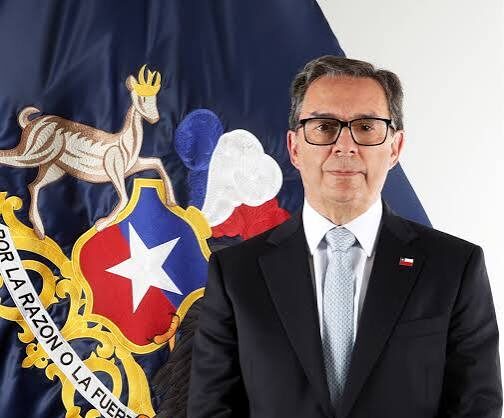
Los dichos del ministro chileno fueron durante una entrevista con Radio Polar, en Magallanes, en medio de la discusión por la apertura de una ruta marítima entre el sur de Chile y las Malvinas. “Chile ha señalado que apoya la pretensión argentina, su reclamo de soberanía sobre las Malvinas o Falkland; pero hay una situación de hecho: un país amigo hace 200 años ejerce soberanía”, sostuvo Barros.
Y agregó que una eventual solución debe contemplar “la voluntad e interés de las personas involucradas” y alcanzarse por el camino de la paz. «Una cosa es apoyar un reclamo frente a la posición de un país amigo, pero de acuerdo al derecho internacional, respetando la voluntad e interés de las personas involucradas y por la vía pacífica”, afirmó el titular de Defensa del gobierno de Antonio Kast.
El respaldo a la ruta Punta Arenas-Malvinas
El ministro también fue consultado específicamente por la posibilidad de desarrollar actividades comerciales entre Punta Arenas y las Islas Malvinas. Frente a ese escenario, sostuvo que Chile y la comunidad de Magallanes tienen derecho a desarrollar actividades comerciales dentro del marco legal y afirmó que no veía inconvenientes en que esas operaciones se concreten.
Radio Polar ya había informado durante septiembre sobre el respaldo del alcalde de Punta Arenas, Claudio Radonich, a una apertura comercial con las islas y sobre la discusión en torno a una eventual ruta hacia Puerto Stanley.

Qué dice el Mercosur sobre Malvinas
Las declaraciones del ministro chileno deben leerse en un contexto regional en el que Chile continúa suscribiendo documentos del Mercosur que respaldan los derechos argentinos en la disputa de soberanía.
En junio de 2026, durante la cumbre del bloque en Asunción, el presidente José Antonio Kast participó de la declaración especial sobre Malvinas. El documento reafirmó los términos de la declaración de 1996 y reiteró el respaldo a los “legítimos derechos” de la Argentina en la disputa de soberanía con el Reino Unido.
También señaló que las medidas unilaterales de exploración y explotación de recursos naturales en el área en controversia no son compatibles con la Resolución 31/49 de Naciones Unidas.
Por eso, las declaraciones de Barros abren un interrogante sobre el alcance que tendrá la posición expresada por el ministro en la política exterior y de defensa del gobierno de Kast, especialmente frente a una actividad comercial que involucra directamente a las islas.
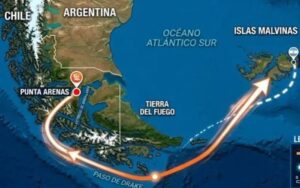
Ruta comercial: Punta Arenas, Chile a Malvinas
La cuestión de la soberanía sobre Malvinas y la posición de Naciones Unidas
El punto más sensible de las declaraciones de Barros aparece en su referencia a la “situación de hecho” y al ejercicio de soberanía británica sobre las islas. La Resolución 2065 de la Asamblea General de Naciones Unidas, aprobada en 1965, reconoce la existencia de una disputa de soberanía entre la Argentina y el Reino Unido e insta a ambos gobiernos a negociar una solución pacífica, teniendo en cuenta los intereses de la población de las islas.
Documentos posteriores de Naciones Unidas también describen la expulsión de las autoridades y habitantes argentinos en 1833 y caracterizan la cuestión Malvinas como una disputa de soberanía entre ambos países.
La diferencia entre hablar de una “situación de hecho” y reconocer jurídicamente la soberanía británica resulta central en este debate. La posición oficial argentina sostiene que la presencia británica no resuelve la disputa de soberanía.
Recursos naturales, comercio y compromisos regionales
El conflicto también tiene una dimensión económica. La discusión sobre la ruta marítima ocurre en un escenario en el que existen intereses vinculados con la pesca, los hidrocarburos y otras actividades económicas en el Atlántico Sur.
La declaración del Mercosur de junio de 2026 volvió a señalar que las medidas unilaterales de exploración y explotación de recursos naturales en el área en disputa no son compatibles con las resoluciones de Naciones Unidas. Además, reconoció el derecho de la Argentina a promover acciones legales contra actividades que considere no autorizadas, siempre dentro del Derecho Internacional.
Reino Unido apuntó contra Argentina: «No tienen la capacidad de tomar las islas»
El gobierno del Reino Unido volvió a endurecer su posición frente al reclamo argentino por las Islas Malvinas. El secretario de Defensa británico, Wes Streeting, afirmó que la Argentina “no tiene la capacidad de tomar las islas” y sostuvo que su país sí cuenta con los recursos necesarios para defenderlas ante una eventual escalada militar. Las declaraciones fueron realizadas en una entrevista con el diario británico The Sun.
Streeting respondió así a las recientes declaraciones del presidente Javier Milei, quien volvió a reivindicar la soberanía argentina sobre el archipiélago y anunció medidas contra empresas petroleras que desarrollen actividades en el área en disputa. El funcionario británico sostuvo que los planteos argentinos forman parte de una posición que Londres escucha “año tras año” y aseguró que el Reino Unido mantiene su compromiso con las islas.

“Los argentinos no tienen la capacidad de tomar las islas. Gran Bretaña sí tiene la capacidad de defenderlas”, afirmó Streeting, según la entrevista difundida por The Sun. El funcionario también sostuvo que la cuestión quedó resuelta en 1982 y volvió a respaldar la posición de los habitantes de las islas, que según Londres desean mantener el vínculo con el Reino Unido.
La declaración se produjo después de que Milei renovara en las últimas semanas su reclamo de soberanía y planteara un endurecimiento de la política argentina frente a las actividades hidrocarburíferas en el archipiélago. El Presidente también anunció el envío al Congreso de un proyecto para reforzar las sanciones contra empresas que operen en la zona.
El cruce de Milei con un periodista británico sobre Malvinas
En el tramo final de su gira por Nueva York, el presidente Javier Milei señaló que Argentina trataría a los habitantes de las islas Malvinas “con dignidad y con justicia” si lograra recuperar la soberanía del archipiélago. Lo dijo durante una entrevista con Bloomberg en el Economic Club de Nueva York, un espacio que en el pasado albergó discursos de figuras como John Kennedy, Winston Churchill y Mijaíl Gorbachov, en lo que fue una de sus últimas actividades antes de regresar al país.
La presentación tuvo lugar el jueves pasado, un día después de que el mandatario reclamara ante la Asamblea General de la ONU la reanudación de negociaciones bilaterales con el Reino Unido por la soberanía del archipiélago.
Cuando fue consultado sobre lo qué haría con los aproximadamente 3.600 habitantes de las islas en caso de que Argentina lograra recuperarlas, Milei respondió con una distinción que considera central: “El pueblo originario fue desplazado por Gran Bretaña, que impuso otra población”, afirmó, y agregó que Argentina “reclama esa soberanía por geografía, por derecho y por historia”.
Primicias Rurales
Fuente: Ambito
Versión en inglés:
Chile Conditions Its Support for Argentina on the Malvinas Issue: “The United Kingdom Has Exercised Sovereignty for 200 Years” (English version)
AMBITO – September 27, 2026 – 10:26 a.m.
Chile’s Defense Minister Fernando Barros Tocornal endorsed the maritime corridor between Punta Arenas and the Malvinas and spoke about Chile’s relationship with London.
Relations between Argentina and Chile have once again become entangled in the Malvinas issue following statements by Chilean Defense Minister Fernando Barros Tocornal, who backed the development of commercial activities between Punta Arenas and the islands and described the United Kingdom as a “friendly country” that “has exercised sovereignty over the Malvinas for 200 years.” His comments were made in an interview with Radio Polar in Magallanes.
Meanwhile, in recent hours, the United Kingdom once again hardened its position regarding Argentina’s claim to the Malvinas. British Defense Secretary Wes Streeting said that Argentina “does not have the capacity to take the islands” and maintained that his country has the resources necessary to defend them in the event of a military escalation. The remarks were made in an interview with the British newspaper The Sun.
Malvinas: Chile’s Defense Minister Makes Statements That Concern Argentina
The Chilean minister made the remarks during an interview with Radio Polar in Magallanes, amid discussions over the opening of a maritime route between southern Chile and the Malvinas.
“Chile has stated that it supports Argentina’s position, its sovereignty claim over the Malvinas or Falkland; but there is a situation of fact: a friendly country has exercised sovereignty [there] for 200 years,” Barros said.
He added that any eventual solution must take into account “the will and interests of the people involved” and must be reached peacefully.
“One thing is to support a claim against the position of a friendly country, but in accordance with international law, respecting the will and interests of the people involved and through peaceful means,” said the Defense Minister in the government of President Antonio Kast.
Support for the Punta Arenas–Malvinas Route
The minister was also specifically asked about the possibility of developing commercial activities between Punta Arenas and the Malvinas.
In response, he said that Chile and the Magallanes community have the right to conduct commercial activities within the legal framework and stated that he saw no problem with such operations going ahead.
The statement comes as debate continues in Magallanes over the creation of a maritime corridor with the islands. The project has been promoted by local authorities and business sectors in the region, which argue that it would expand commercial and logistical ties with the archipelago.
Radio Polar had already reported in September on Punta Arenas Mayor Claudio Radonich’s support for opening commercial relations with the islands and on discussions surrounding a possible route to Port Stanley.
What MERCOSUR Says About the Malvinas
The Chilean minister’s statements must be viewed in the context of Chile’s continued endorsement of MERCOSUR documents supporting Argentina’s rights in the sovereignty dispute.
In June 2026, during the bloc’s summit in Asunción, President José Antonio Kast participated in the special declaration on the Malvinas. The document reaffirmed the terms of the 1996 declaration and reiterated support for Argentina’s “legitimate rights” in the sovereignty dispute with the United Kingdom. It also stated that unilateral measures involving the exploration and exploitation of natural resources in the disputed area are incompatible with UN General Assembly Resolution 31/49.
Consequently, Barros’s statements raise questions about the extent to which the position expressed by the minister will affect the foreign and defense policy of the Kast administration, particularly regarding commercial activity directly involving the islands.
The Malvinas Sovereignty Dispute and the United Nations Position
The most sensitive part of Barros’s remarks concerns his reference to the “situation of fact” and to the exercise of British sovereignty over the islands.
United Nations General Assembly Resolution 2065, adopted in 1965, recognizes the existence of a sovereignty dispute between Argentina and the United Kingdom and calls on both governments to negotiate a peaceful solution, taking into account the interests of the population of the islands.
Subsequent UN documents have continued to characterize the Malvinas question as a sovereignty dispute between Argentina and the United Kingdom and have repeatedly called for negotiations.
The distinction between referring to a “situation of fact” and legally recognizing British sovereignty is therefore central to the debate. Argentina’s official position is that the existence of British administration does not resolve the sovereignty dispute. The UN itself describes the islands as the subject of a sovereignty dispute between the two governments.
Natural Resources, Trade and Regional Commitments
The dispute also has an economic dimension. The debate over the maritime route is taking place against a backdrop of interests involving fishing, hydrocarbons and other economic activities in the South Atlantic.
The June 2026 MERCOSUR declaration again stated that unilateral measures involving the exploration and exploitation of natural resources in the disputed area are incompatible with relevant United Nations resolutions. It also reiterated support for Argentina’s rights in the sovereignty dispute.
United Kingdom Hits Back at Argentina: “They Do Not Have the Capacity to Take the Islands”
The United Kingdom has once again hardened its position regarding Argentina’s claim to the Malvinas.
British Defense Secretary Wes Streeting said that Argentina “does not have the capacity to take the islands” and maintained that Britain does have the resources necessary to defend them in the event of a military escalation. The comments were made in an interview with The Sun. British reporting has also described the UK government’s commitment to the islands as “absolute and unshakeable.”
Streeting was responding to recent statements by President Javier Milei, who once again asserted Argentina’s sovereignty claim over the archipelago and announced measures against oil companies conducting activities in the disputed area.
“The Argentinians do not have the capacity to take the islands. Britain does have the capacity to defend them,” Streeting said, according to the interview reported by The Sun. He also maintained that the issue had been settled in 1982 and reiterated support for the position of the islanders, who, according to the British government, wish to retain their relationship with the United Kingdom.
The statement followed Milei’s renewed sovereignty claim and his announcement of tougher measures against hydrocarbon activities in the archipelago. Reuters reported that Milei said Argentina would sanction oil companies drilling in the Malvinas Islands and would seek to strengthen the legal framework concerning activities affecting Argentina’s natural resources.
Milei’s Exchange with a British Journalist Over the Malvinas
At the end of his visit to New York, President Javier Milei said that Argentina would treat the inhabitants of the Malvinas “with dignity and justice” if it were to regain sovereignty over the archipelago.
He made the statement during an interview with Bloomberg at the Economic Club of New York, on September 24. Asked what would happen to the approximately 3,600 inhabitants of the islands if Argentina were to regain sovereignty, Milei said:
“I am very clear that those people will be treated with dignity and justice. We are not going to kick them out.”
Milei also reiterated Argentina’s position that the current island population is not an indigenous population entitled to self-determination. He argued that Britain displaced an earlier population and installed another, and said that Argentina’s sovereignty claim is based on “geography, law and history.”
Traducción: María Marta Cafiero