
Los líderes independentistas del Reino Unido firmaron un pacto histórico que desafía a Londres y reabre las discusiones geopolíticas; mientras la diplomacia analiza el escenario, especialistas advierten que la situación jurídica de las islas Malvinas no se modifica de forma automática al tratarse de un Territorio Británico de Ultramar.
Análisis
Buenos Aires sábado 26 septiembre (PR/26)–El lunes 14 de septiembre, en la ciudad de Cardiff, los líderes de Escocia, Gales e Irlanda del Norte reclamaron formalmente el derecho a la autodeterminación de sus respectivas naciones.
En una declaración conjunta, ubicaron claramente su futuro político dentro de la Unión Europea, marcando un hito político de gran repercusión internacional. Los firmantes fueron John Swinney (SNP), Rhun ap Iorwerth (Plaid Cymru) y Michelle O’Neill (Sinn Féin), quienes estamparon su firma como jefes de sus fuerzas partidarias.
Es importante destacar que no lo hicieron en representación institucional de sus gobiernos, lo que matiza el alcance formal de la rúbrica. Aun así, la escena política resulta absolutamente inédita desde los procesos de descentralización iniciados en el año 1999 en el territorio británico.
Por primera vez en décadas, las tres naciones tienen al frente a figuras políticas claramente favorables a la independencia o a la reunificación irlandesa.
El contexto internacional y la respuesta de Londres
Este gesto político resonante llegó apenas días después de que Donald Trump, desde Dublín, declarara públicamente que una Irlanda unificada sería algo fantástico.
El expresidente estadounidense añadió que, a su juicio personal, ese escenario terminará ocurriendo con el correr de los años.
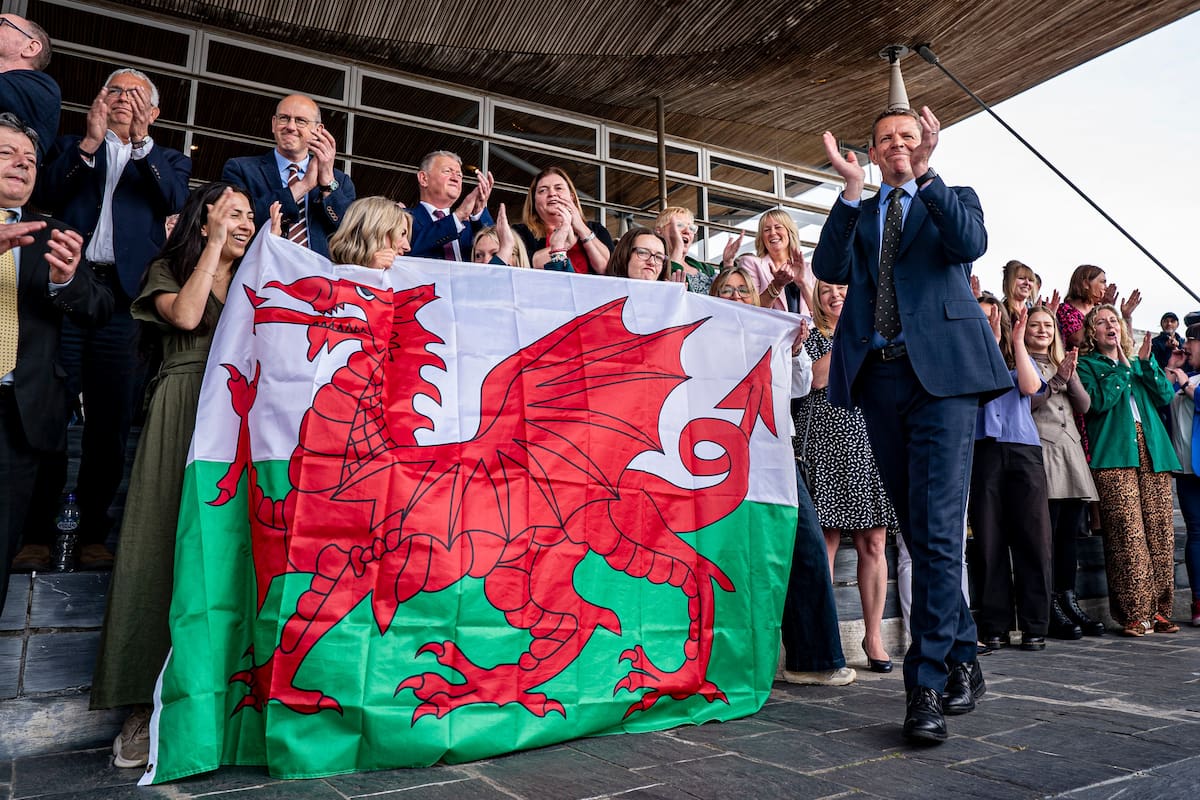
Por su parte, el gobierno central de Londres reaccionó de inmediato a través de un firme llamado a la unidad impulsado por el primer ministro Andy Burnham.
Hasta el momento actual, el gobierno británico sigue descartando categóricamente la autorización de una nueva consulta popular sobre la independencia escocesa.
En paralelo a este pacto político, los primeros ministros de Gales y Escocia concretaron por otro carril el llamado Cardiff Agreement. Se trata de un marco de cooperación institucional entre ambos gobiernos que carece de carácter jurídicamente vinculante.
Dicho entendimiento no afecta en absoluto las competencias legales ni las atribuciones constitucionales de ninguna de las partes involucradas.
La mirada experta sobre el impacto en el Atlántico Sur
Ante este panorama complejo, la investigadora María Salomón, especialista del Observatorio de Malvinas de la Universidad Nacional de Rosario, aportó claridad a PERFIL.
La académica explicó con precisión que es fundamental diferenciar ambas iniciativas: una responde a una estrategia partidaria y la otra a la gestión gubernamental.
Ante la pregunta de si este escenario puede mover algo en el reclamo soberano argentino, la experta mantiene una postura muy cauta y analítica.
Salomón advierte que la crisis territorial británica no modifica de manera automática el estatus jurídico internacional de las islas Malvinas.
Sin embargo, aclara que este fenómeno sí es capaz de generar un contexto político y diplomático sumamente interesante que la diplomacia argentina podría estudiar a fondo.
Diferencias jurídicas y oportunidades de análisis
La razón principal radica en que los casos no son jurídicamente equivalentes bajo el derecho internacional vigente.
Mientras que Escocia, Gales e Irlanda del Norte son partes constituyentes del Reino Unido, las Malvinas constituyen un Territorio Británico de Ultramar.

Sobre el archipiélago austral existe una disputa de soberanía abierta que sigue siendo tratada activamente en los organismos de las Naciones Unidas.

Por este motivo, la investigadora advierte que sería incorrecto argumentar de forma simplista que si Escocia se independiza, las Malvinas pueden hacerlo automáticamente.
Los mecanismos legales, históricos y políticos aplicables a cada situación son profundamente diferentes y exigen rigor conceptual. La verdadera oportunidad metodológica y analítica reside en dejar de ver al Reino Unido como un bloque homogéneo.
Cinco planos para entender los intersticios británicos
Salomón propone observar detalladamente los intersticios institucionales, es decir, las tensiones entre los gobiernos territoriales, el Parlamento y la sociedad.
Para ello, sugiere ordenar este análisis estratégico en cinco planos clave: constitucional, partidario, económico, estratégico-militar y cultural-académico. La especialista aclara que esto no significa que dichos actores respalden la posición argentina, sino que abren espacios alternativos de debate y diplomacia internacional.
Asimismo, la académica descarta leer esta tensión interna como una señal de repliegue militar en el Atlántico Sur.
Por el contrario, recuerda que la política británica hacia sus territorios de ultramar se ha reforzado notablemente en los documentos oficiales recientes. En esa línea, destaca que la Strategic Defence Review 2025 ratificó a los territorios de ultramar como objetivos centrales de la defensa británica.
El impacto del Brexit y las conclusiones del escenario
El puente más concreto entre el territorio británico y las islas Malvinas se encuentra, en realidad, en las consecuencias del Brexit.
Los líderes firmantes atribuyen al divorcio europeo un perjuicio directo para sus economías y naciones constituyentes.
En el caso específico de las islas, quedaron excluidas del acuerdo comercial entre la Unión Europea y el Reino Unido, enfrentando aranceles aduaneros europeos.
Salomón resume que el Brexit redujo ventajas comerciales malvinenses frente al mercado europeo, aunque sin eliminar por completo la presencia económica continental.
En las islas siguen operando activamente empresas europeas vinculadas a la actividad pesquera, pilar fundamental de los ingresos económicos isleños. Para concluir, la investigadora señala que la utilidad de este momento radica en ampliar la mirada analítica y los interlocutores.
Esto permite comprender mejor el contexto político global en el que se desarrolla la disputa, sin descuidar la sólida cuestión jurídica de soberanía.
Primicias Rurales
Fuente: www.perfil.com
Versión en inglés
Territorial Crisis in the United Kingdom: What Opportunities and Nuances Does It Open Up for Argentina’s Claim to the Falkland Islands? (English version)
The United Kingdom’s pro-independence leaders have signed a historic pact challenging London and reopening geopolitical discussions; while diplomats analyze the situation, experts warn that the legal status of the Falkland Islands is not automatically altered because they are a British Overseas Territory.
Analysis
Buenos Aires, Saturday, September 26 (PR/26) — On Monday, September 14, in the city of Cardiff, the leaders of Scotland, Wales, and Northern Ireland formally asserted the right to self-determination of their respective nations.
In a joint declaration, they clearly placed their political future within the European Union, marking a political milestone with significant international repercussions. The signatories were John Swinney (SNP), Rhun ap Iorwerth (Plaid Cymru), and Michelle O’Neill (Sinn Féin), who signed the document as leaders of their respective political forces.
It is important to note that they did not do so in an official capacity on behalf of their governments, which qualifies the formal scope of the signing. Even so, the political scene is entirely unprecedented since the devolution processes began in 1999 across the United Kingdom.
For the first time in decades, the three nations are led by political figures who are clearly supportive of either independence or Irish reunification.
The International Context and London’s Response
This significant political gesture came just days after Donald Trump, speaking from Dublin, publicly declared that a united Ireland would be something fantastic.
The former U.S. president added that, in his personal view, such a scenario would eventually come about over the course of the years.
For its part, the central government in London immediately responded with a firm call for unity led by Prime Minister Andy Burnham.
At present, the British government continues to categorically reject authorizing a new referendum on Scottish independence.
In parallel with this political pact, the prime ministers of Wales and Scotland pursued a separate initiative known as the Cardiff Agreement. It is an institutional cooperation framework between the two governments that is not legally binding.
The understanding does not affect the legal powers or constitutional prerogatives of either of the parties involved.
The Expert View on the Impact in the South Atlantic
Against this complex backdrop, researcher María Salomón, a specialist with the Malvinas Observatory at the National University of Rosario, provided clarification to PERFIL.
The academic explained that it is essential to distinguish between the two initiatives: one is part of a political-party strategy, while the other concerns government administration.
Asked whether this scenario could have any impact on Argentina’s sovereignty claim, the expert adopted a very cautious and analytical position.
Salomón cautions that the British territorial crisis does not automatically alter the international legal status of the Falkland Islands.
However, she clarifies that this phenomenon could generate a highly interesting political and diplomatic context that Argentine diplomats might examine in depth.
Legal Differences and Opportunities for Analysis
The main reason is that the cases are not legally equivalent under current international law.
While Scotland, Wales, and Northern Ireland are constituent parts of the United Kingdom, the Falkland Islands constitute a British Overseas Territory.
There is an ongoing sovereignty dispute over the southern archipelago, which continues to be actively addressed within United Nations bodies.
For this reason, the researcher warns that it would be incorrect to argue simplistically that if Scotland becomes independent, the Falkland Islands could do so automatically.
The legal, historical, and political mechanisms applicable to each situation are profoundly different and require conceptual rigor. The real methodological and analytical opportunity lies in ceasing to view the United Kingdom as a homogeneous bloc.
Five Dimensions for Understanding the British Institutional Fault Lines
Salomón proposes examining in detail the institutional fault lines—that is, the tensions between territorial governments, Parliament, and society.
To this end, she suggests organizing this strategic analysis around five key dimensions: constitutional, political-party, economic, strategic-military, and cultural-academic. The specialist clarifies that this does not mean that these actors support Argentina’s position, but rather that they open alternative spaces for debate and international diplomacy.
The academic also rejects interpreting this internal tension as a sign of a British military withdrawal from the South Atlantic.
On the contrary, she points out that British policy toward its overseas territories has been significantly strengthened in recent official documents. Along these lines, she emphasizes that the Strategic Defence Review 2025 reaffirmed the overseas territories as central objectives of British defense policy.
The Impact of Brexit and Conclusions from the Current Scenario
The most concrete link between the British territories and the Falkland Islands is, in fact, found in the consequences of Brexit.
The leaders who signed the pact attribute direct economic harm to the European split, both for their economies and for the United Kingdom’s constituent nations.
In the specific case of the islands, they were excluded from the trade agreement between the European Union and the United Kingdom, and consequently face European customs tariffs.
Salomón concludes that Brexit reduced the Falkland Islands’ trade advantages in relation to the European market, although it did not completely eliminate the continent’s economic presence.
European companies connected to the fishing industry, a fundamental pillar of the islands’ economic revenues, continue to operate actively there.
In conclusion, the researcher points out that the value of this moment lies in broadening the analytical perspective and expanding the range of interlocutors.
This makes it possible to better understand the global political context in which the dispute unfolds, without losing sight of the solid legal question of sovereignty.
Primicias Rurales
Source: www.perfil.com
Traducción: María Marta Cafiero