Argentina, principal proveedor de carne bovina de alta calidad para la Unión Europea, presentó en SIAL París los avances de VISEC Carne. Se trata de una plataforma integral que une trazabilidad ganadera, información geográfica y evidencia ambiental para facilitar a los importadores la diligencia debida del reglamento EUDR.
Buenos Aires, lunes 26 octubre (PR/26) — En el marco de la feria SIAL París, el sector cárnico argentino presentó los avances de VISEC Carne, una herramienta clave para consolidar la exportación de carne bovina premium hacia el mercado europeo.
La iniciativa busca responder a las nuevas exigencias ambientales internacionales y respaldar el proceso de diligencia debida que deben realizar los compradores en el viejo continente.
La Secretaría de Agricultura destacó que el país es beneficiario del 44% de la Cuota Hilton global, registrando en el ciclo 2025/2026 un total de 29.388,86 toneladas exportadas, lo que representa una ejecución del 100% del cupo. A esta sólida presencia comercial se le suma ahora evidencia digitalizada y verificable sobre toda la cadena productiva de cada embarque.
VISEC Carne funciona como una plataforma de trazabilidad socioambiental que reúne a todos los eslabones de la ganadería bovina. El sistema conecta la información oficial del SENASA con datos geográficos, análisis satelital y documentación sobre cumplimiento legal, organizando las pruebas de manera transparente alrededor de cada operación comercial.
Según datos de VISEC al 1 de octubre de 2026, las pruebas piloto del sistema registran 58.598 informes generados, 171 embarques liberados y 1.335.262 caravanas validadas. Estos indicadores demuestran la capacidad operativa de la plataforma para procesar volúmenes masivos de datos en un proceso dinámico al que se siguen sumando más productores.
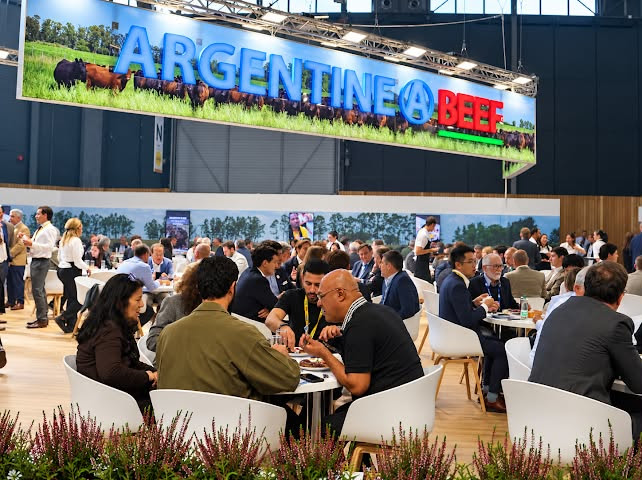
El Instituto de Promoción de la Carne Vacuna Argentina (IPCVA) lidera la presentación de esta estrategia en el Pabellón Argentine Beef de SIAL. La feria coincide con la preparación de los operadores globales ante la entrada en vigencia del Reglamento de la Unión Europea sobre Productos Libres de Deforestación (EUDR), prevista para el 30 de diciembre de 2026.
El presidente del IPCVA, Georges Breitschmitt, afirmó en SIAL París que el objetivo principal es reafirmar el compromiso como proveedores confiables para un mercado exigente. El directivo remarcó la importancia de respaldar con tecnología la calidad premium y el origen sustentable que históricamente han caracterizado al producto argentino.

Un embarque, múltiples orígenes
La complejidad de la cadena ganadera se refleja en la logística de exportación, donde un solo embarque puede involucrar unas 54 tropas o lotes, cerca de 1.300 identificaciones animales y aproximadamente 160 establecimientos. Para cumplir con la normativa EUDR, la geolocalización debe abarcar todos los campos donde permanecieron los animales a lo largo de su vida.
A través de la plataforma VISEC Carne, los importadores europeos pueden acceder a la información precisa de los embarques y consultar los datos de trazabilidad, controles sanitarios, mapas georreferenciados y documentación de respaldo. Toda la información queda organizada por operación comercial para facilitar la verificación de los estándares exigidos.
Los datos geográficos de los campos se descargan en formato GeoJSON, compatible con el Sistema de Información EUDR de la Comisión Europea. Además, el monitoreo ambiental utiliza imágenes satelitales para evaluar la cobertura del suelo desde el 31 de diciembre de 2020, fecha de corte fijada por la norma ambiental.
Riesgo país y evidencia territorial
Actualmente, la Comisión Europea clasifica a la Argentina como un país de riesgo estándar dentro del esquema del EUDR. Sin embargo, un estudio coordinado por la Red de Seguridad Alimentaria del CONICET, con aportes del INTA y universidades, determinó que el 87% del territorio nacional presenta riesgo nulo de deforestación.
Este trabajo científico impulsado por el IPCVA aporta evidencia territorial valiosa sobre la sustentabilidad ganadera, aunque no reemplaza la evaluación individual que debe realizarse sobre los establecimientos de cada embarque. Los resultados demuestran la compatibilidad ambiental de los sistemas de producción locales.
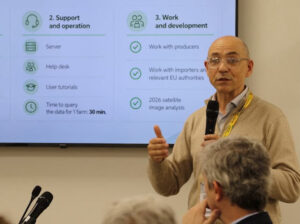
Los avances de Argentina recibieron el respaldo de Inmaculada Montero Luque, jefa de la Sección Economía y Comercio de la Delegación de la Unión Europea. Durante el Congreso Aapresid, la funcionaria destacó que, entre los países del Mercosur, Argentina es quien mejor ha preparado su estructura para responder a las exigencias comunitarias.
Preparación argentina y responsabilidad del operador
Es importante remarcar que VISEC Carne no actúa como un organismo certificador ni sustituye las responsabilidades legales de los compradores europeos. Su función principal es integrar y sistematizar la información de origen, análisis geoespacial y documentación respaldatoria para que el operador pueda realizar su evaluación.
El desarrollo de la herramienta se apoya en los registros oficiales del SENASA y en la articulación entre productores, frigoríficos y entidades técnicas. Por su parte, el IPCVA acompaña el proceso brindando asistencia técnica y capacitación para facilitar la incorporación de nuevos establecimientos a la plataforma.
En el cierre de la presentación en París, Georges Breitschmitt sintetizó el mensaje de la ganadería nacional al señalar que el sector ha demostrado con datos concretos que no necesita derribar árboles para producir la mejor carne del mundo. Las empresas interesadas pueden consultar la guía para importadores en www.visec.com.ar/viseccarne/ o escribir a carne@visec.com.ar.
Argentina strengthens traceability of its premium beef for the European market
At SIAL Paris, Argentine Beef presents the latest developments in VISEC Carne, a platform combining livestock traceability, geographical information and environmental evidence to help European importers carry out due diligence under the EUDR.
During its initial operational trials, the system has recorded 171 cleared shipments, 58,598 reports generated and 1,335,262 validated animal identification tags, according to VISEC data as at 1 October 2026.
Paris, October 2026. Argentina, a supplier of high-quality beef to the European Union and holder of 44% of the global Hilton Quota, according to Argentina’s Secretariat of Agriculture, is presenting traceability and evidence of origin at SIAL Paris to address the EU’s new requirements and support importers’ due diligence.
Official figures for the 2025/2026 Hilton Quota period show that Argentina exported 29,388.86 tonnes of high-quality beef to the EU, representing a reported 100% utilisation of its available quota. Argentine Beef is complementing this established trade relationship with verifiable information about the supply chain behind each shipment.
VISEC Carne is an Argentine socio-environmental traceability platform bringing together stakeholders across the beef cattle supply chain. It links official animal traceability records with geographical data, satellite analysis and documentation relating to legal compliance requirements, organising this evidence around individual commercial transactions.
According to VISEC data as at 1 October 2026, the initial pilot trials and operational testing of VISEC Carne have produced 58,598 reports, 171 cleared shipments and 1,335,262 validated animal identification tags. These figures demonstrate the platform’s capacity to process and organise information relating to traceability and the socio-environmental assessment of commercial transactions. The figures continue to rise as more producers and holdings join this evolving initiative.
The Argentine Beef Promotion Institute (IPCVA) is presenting this strategy at the Argentine Beef Pavilion at SIAL, taking place from 17 to 21 October at Paris Nord Villepinte. The exhibition comes as operators prepare for the application of the EU Deforestation Regulation (EUDR), scheduled for 30 December 2026 for large and medium-sized operators.
“We are here to reaffirm our commitment as reliable suppliers to a market that has long valued the premium quality of Argentine beef,” says Georges Breitschmitt, President of the IPCVA, at SIAL Paris 2026.
One shipment, multiple origins
The challenge of handling large volumes and systematically organising complex information is illustrated by the example presented by Argentina: a single shipment may involve some 54 groups or batches of cattle, around 1,300 individual animal identifications and approximately 160 holdings. This is an illustrative transaction, not an average shipment. For cattle-derived products covered by the EUDR, the required geolocation must relate to every holding where the animals have been kept throughout their lives.
Through VISEC Carne, European importers can access information on shipments linked to their Argentine suppliers, identify the holdings involved in the animals’ production history, and consult traceability records, control results, maps and supporting documentation. The platform therefore provides structured, transaction-specific information that can support the due diligence procedures required under the EUDR.
Geographical data for holdings can be downloaded in GeoJSON format, which is compatible with the upload mechanisms of the European Commission’s EUDR Information System. The environmental analysis draws on time-series satellite imagery to assess changes in land cover since 31 December 2020, the cut-off date established by the regulation. This evidence is supplemented by traceability information and documentation relating to relevant legislation in the country of production.
Country risk and territorial evidence
The European Commission currently classifies Argentina as a standard-risk country under the EUDR. Separately, a study promoted by the IPCVA and coordinated by CONICET’s Food Safety Network, with contributions from specialists at INTA and universities, identifies 87% of Argentina’s territory as having zero deforestation risk under the methodology used in the territorial analysis. This finding provides complementary scientific evidence; it does not alter the EU’s country classification or replace the assessment of the holdings involved in each shipment.
Argentina’s preparations and operators’ responsibilities
Argentina’s progress on traceability and sustainability has also been recognised by Inmaculada Montero Luque, Head of the Economic and Trade Section of the Delegation of the European Union to Argentina. Speaking at the Aapresid Congress in August 2026, she remarked: “If there is one Mercosur country that has done its homework, it is Argentina.”
VISEC Carne is not a certification body and does not replace the due diligence obligations established under the EUDR. Its role is to consolidate and make available information on origin, traceability, geospatial analysis and supporting documentation, enabling European operators to assess the relevant aspects of each transaction.
The initiative draws on SENASA’s official systems and cooperation between producers, meat processors, technical organisations and international buyers. The IPCVA supports this process through technical assistance, training and practical support to facilitate the onboarding of cattle holdings onto the platform.
“We are demonstrating that we do not need to cut down trees to produce the best beef in the world,” concludes Georges Breitschmitt, President of the IPCVA, at SIAL Paris 2026.
Information for importing companies
Companies wishing to register and consult information relating to their shipments can access VISEC Carne at https://www.visec.com.ar/
Argentine Beef · IPCVA
Operational data: VISEC, as at 1 October 2026. Trade: Argentina’s Secretariat of Agriculture. EUDR classification: European Commission. Territorial analysis: IPCVA/CONICET Food Safety Network, as reported by INTA. Montero Luque quotation: La Capital (6 August 2026). Sources and further details are provided in the accompanying dossier.
The documentation includes information on compliance with protected natural area requirements, tax laws, labour laws and respect for Indigenous peoples.